

10 Breakthrough Innovations in Cardiac Surgery : You Need to Know
The field of cardiac surgery has evolved rapidly over the last two decades, driven by technological innovation, improved imaging, and a deeper understanding of heart disease. These advancements have made heart surgery safer, more precise, and less invasive, significantly improving survival rates and recovery times.
Below are ten major innovations in cardiac surgery that are shaping modern heart care worldwide.
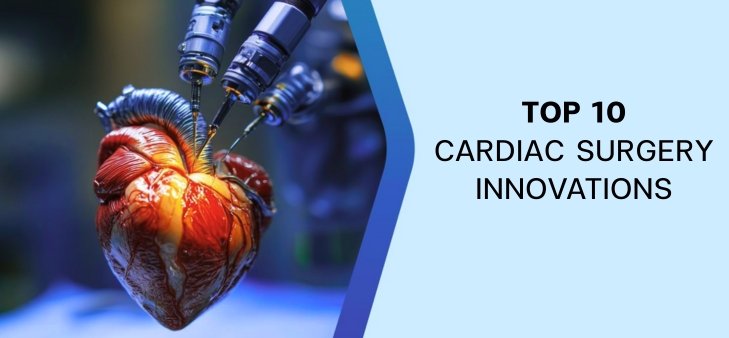
Robotic-Assisted Cardiac Surgery
Robotic-assisted systems enable surgeons to operate through very small incisions with enhanced precision, tremor filtration, and 3D visualization.
While suitable only for select cases, robotic assistance has improved surgical accuracy in carefully chosen patients.
Best suited for: Selected single-vessel or valve procedures
Key benefit: Smaller incisions, less postoperative pain
Transcatheter Aortic Valve Replacement (TAVR)
TAVR has revolutionized the treatment of aortic valve stenosis, particularly in elderly and high-risk patients. The valve is replaced using a catheter-based approach, avoiding open-heart surgery.
Best suited for: High-risk or elderly patients
Key benefit: No sternotomy, faster recovery
3D Printing in Cardiac Surgery Planning
Patient-specific 3D-printed heart models allow surgeons to visualize complex anatomy before surgery. This improves planning for congenital heart disease, valve repair, and complex bypass procedures.
Key benefit: Personalized surgical planning and reduced operative risk
Artificial Intelligence (AI) in Cardiac Care
AI-powered tools assist in:
- Preoperative risk prediction
- Imaging analysis (echo, CT, angiography)
- ICU monitoring and early complication detection
AI enhances decision-making but does not replace surgical expertise.
Minimally Invasive Coronary Artery Bypass Surgery
Minimally invasive bypass techniques avoid splitting the breastbone and use smaller chest incisions while maintaining the long-term durability of grafts.
Key benefit: Faster recovery with proven outcomes
Gold standard alternative: Conventional off-pump CABG for multi-vessel disease
Hybrid Surgery
Hybrid procedures combine interventional cardiology (stents) with surgical bypass or valve repair in a single treatment plan.
Best suited for: Complex coronary anatomy
Key benefit: Tailored treatment with reduced overall risk
Advanced Off-Pump (Beating-Heart) Surgery
Modern off-pump CABG techniques allow bypass surgery without using the heart-lung machine, reducing complications in high-risk patients.
Key benefit: Lower risk of stroke, kidney injury, and inflammation
Improved Heart Valve Repair Techniques
Advanced valve repair strategies preserve the patient’s native valve, especially in mitral valve disease, offering better long-term heart function than valve replacement.
Key benefit: No lifelong anticoagulation in many cases
ECMO (Extracorporeal Membrane Oxygenation) Advancements
ECMO now plays a crucial role in:
- Cardiogenic shock
- Post-cardiac surgery recovery
- Severe heart and lung failure
Modern ECMO systems are safer, more compact, and better monitored.
Regenerative Medicine & Stem Cell Research
Stem cell and regenerative therapies are being actively researched for heart muscle repair after heart attacks and in heart failure. These treatments remain investigational and are not yet standard therapy
The Future of Cardiac Surgery
The future of heart surgery lies in:
- Evidence-based innovation
- Precision surgery
- Patient-specific treatment planning
However, technology alone does not guarantee success. Outcomes still depend heavily on the experience of the cardiac surgeon and the quality of postoperative care.
Renowned experts such as Dr. Ganesh Shivnani, Chairperson of Cardiac Surgery at Sir Ganga Ram Hospital, emphasize that proven techniques with long-term data should always take precedence over untested or hype-driven technology.
Conclusion
Cardiac surgery has entered an era of remarkable advancement, offering patients safer procedures and better quality of life. While innovations continue to evolve, the best outcomes are achieved when advanced technology is combined with surgical expertise, ethical practice, and patient-centered care.
If you or a loved one is considering heart surgery, consult an experienced cardiac surgeon who can guide you toward the most effective and scientifically proven treatment option for your condition.